Uplevel vs. Jellyfish, DX, and LinearB
Compare four approaches to engineering intelligence — and what happens after you find a problem.
TL;DR
Engineering intelligence platforms LinearB, Jellyfish, DX, and Uplevel all help engineering leaders understand how work is moving. But they put the emphasis in different places: PR workflows, engineering investment, developer experience, or organizational change.
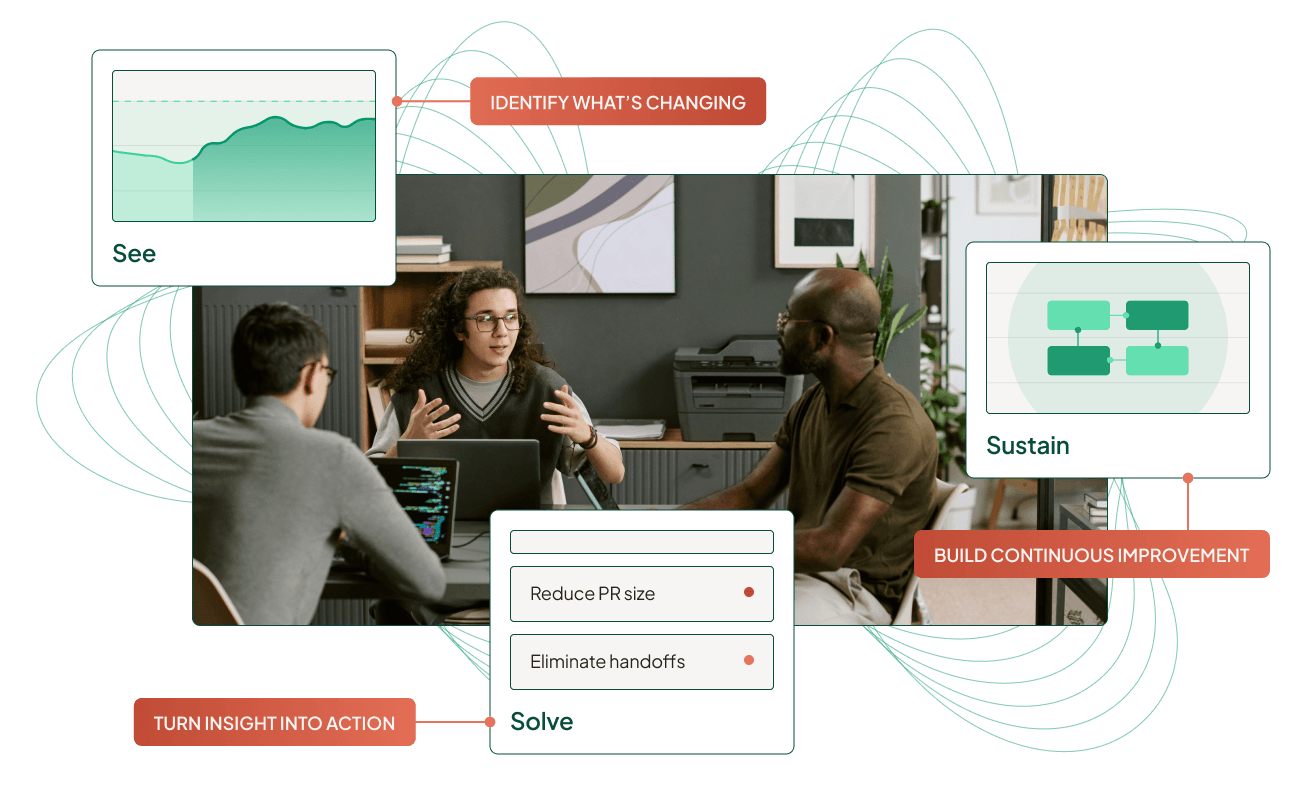
Uplevel combines engineering data, developer sentiment, and structured interviews with developers doing the work. That last layer surfaces habits, decision patterns, ownership gaps, and other human constraints before they fully show up in delivery metrics. Uplevel practitioners then work with leaders and teams to change them.
| Platform | Best fit | Known for | How Uplevel differs |
|---|---|---|---|
| LinearB | Improving PR flow and enforcing workflow policy | gitStream, PR automation, delivery metrics | Uplevel looks beyond the workflow itself to the team behaviors and organizational conditions affecting delivery |
| Jellyfish | Engineering planning, allocation, and R&D investment visibility | Work allocation, DevFinOps, delivery and AI insights | Uplevel combines quantitative data with structured qualitative diagnosis, then puts practitioners into the change work |
| DX | Developer productivity and DevEx measurement | Core 4, DXI, system data, surveys, benchmarking | Uplevel adds deeper qualitative research through DevEx Discovery and uses it to identify behavioral constraints and guide change |
| Uplevel | Enterprise engineering organizations changing how work gets done | System data, DevEx Discovery™, practitioner-led change | Measurement, diagnosis, and capability building are all part of the same model |
DevEx Discovery™ is Uplevel’s structured survey and interview process with engineers, managers, and leaders. It goes deeper than surveys alone to understand how work actually happens: where decisions stall, where ownership is unclear, which habits create friction, and what teams have learned to work around.
Uplevel vs. LinearB
LinearB is built to improve the flow of code through the PR process. gitStream can automate routing and policy, while its metrics show where work is slowing down between coding and deployment.
It's useful when the constraint lives inside the development workflow, but a slow review process may trace back to team design, unclear ownership, competing priorities, or habits that have developed around how decisions get made.
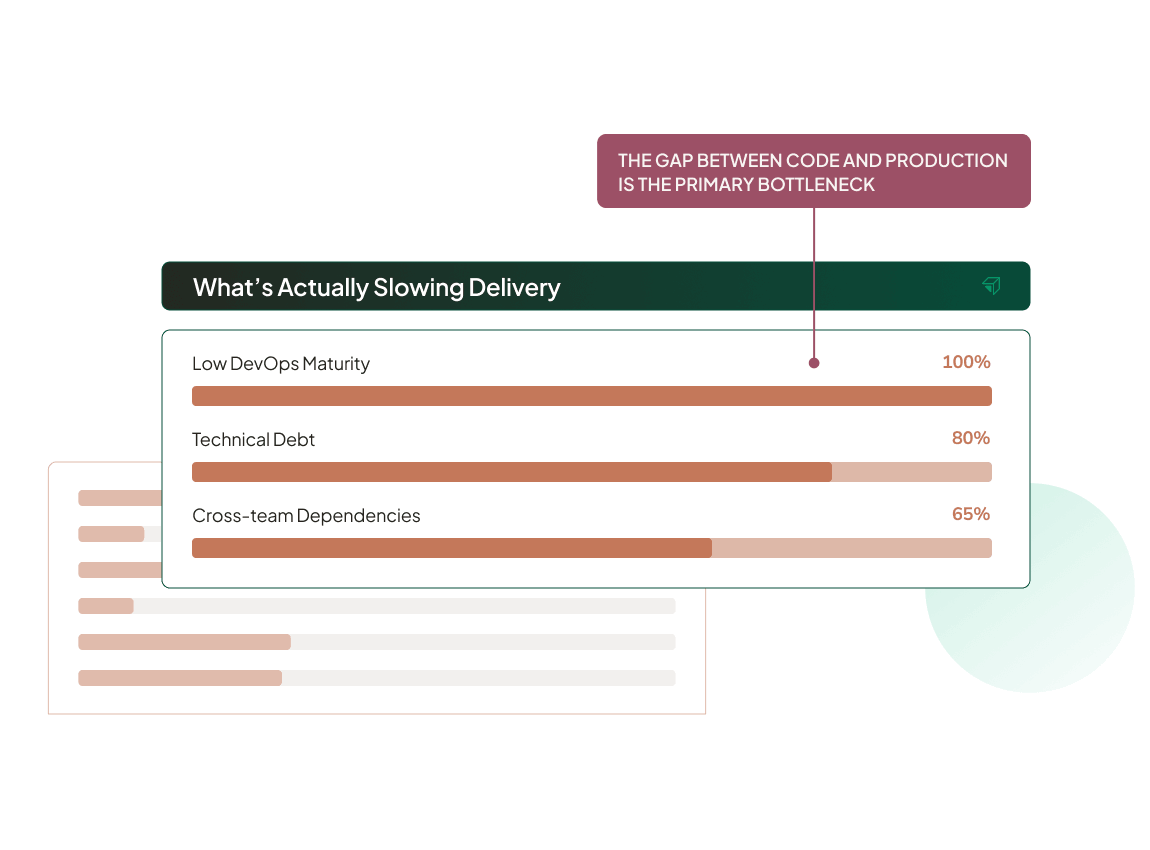
Uplevel looks more broadly at the system around that workflow, surface the systemic conditions that influence delivery data. The goal is to change the operating environment producing the bottleneck, not just the workflow where it appears.
Watch Director of Client Transformation Amy Carrillo Cotten explain what sets Uplevel apart.
Uplevel vs. Jellyfish
Jellyfish is built around engineering planning and investment decisions. It helps leaders see where engineering capacity is going, how work maps to business priorities, and what the data suggests they should pay attention to.
Uplevel is more directly involved in changing what happens next.
Practitioners work with engineers, managers, and leaders to understand which behaviors or operating practices are getting in the way, then help the organization build the capability to keep improving.
Uplevel vs. DX
DX combines system data with developer feedback to measure productivity and developer experience. Its surveys and benchmarks are useful for understanding how developers experience the environment around them.
Uplevel collects developer sentiment too, but DevEx Discovery™ goes considerably deeper than a survey.
Structured interviews give practitioners room to follow an answer. They can understand how a process works in practice, where people have created workarounds, why teams make certain decisions, or where expectations differ between leaders and engineers.
Uplevel uses that information alongside the engineering data to decide what needs to change and then works with the organization to change it.
Frequently asked questions
How is Uplevel different from LinearB, Jellyfish, or DX?
They show you data. Uplevel combines that data with practitioners who've fixed these problems at other engineering orgs before, so the diagnosis turns into an execution plan instead of another login to check.
We already use DX for developer sentiment — do we need Uplevel too?
Sentiment tells you developers are frustrated. It doesn't tell you which of several possible causes is the one to fix first, or how to fix it without breaking something else downstream. That's the layer Uplevel adds on top.
Doesn't LinearB or Jellyfish already show us where the bottleneck is?
Showing and fixing are different jobs. Engineering is a sociotechnical system — visibility into the problem doesn't produce the organizational change needed to fix it. That's where our practitioners come in.
Should we just build this internally instead of buying any of these?
You could definitely build an engineering dashboard. It's easy to do with AI, and it's nearly table stakes for every modern development platform.
But what happens once the data shows a problem?
Knowing cycle time is up doesn’t tell you what’s causing it, which constraint matters most, or how to change the habits and operating practices behind it. Someone has to recommend the right changes for each organization. Someone has to understand why the behavior exists, get the right people involved, change the way the work happens, and see whether the change actually improved the system.
That’s what Uplevel adds: practitioners who bring experience across engineering organizations, diagnose what’s happening in yours, and work with your teams to change it. We bring the dashboard too, but the real value is in how the data drives change.
What's the difference between DORA metrics and an engineering intelligence platform?
DORA is a research framework — four specific delivery measures. An engineering intelligence platform is the category of tool that tracks DORA alongside a broader set of delivery, quality, and team data. DORA tells you what to measure; the platform is what implements it.